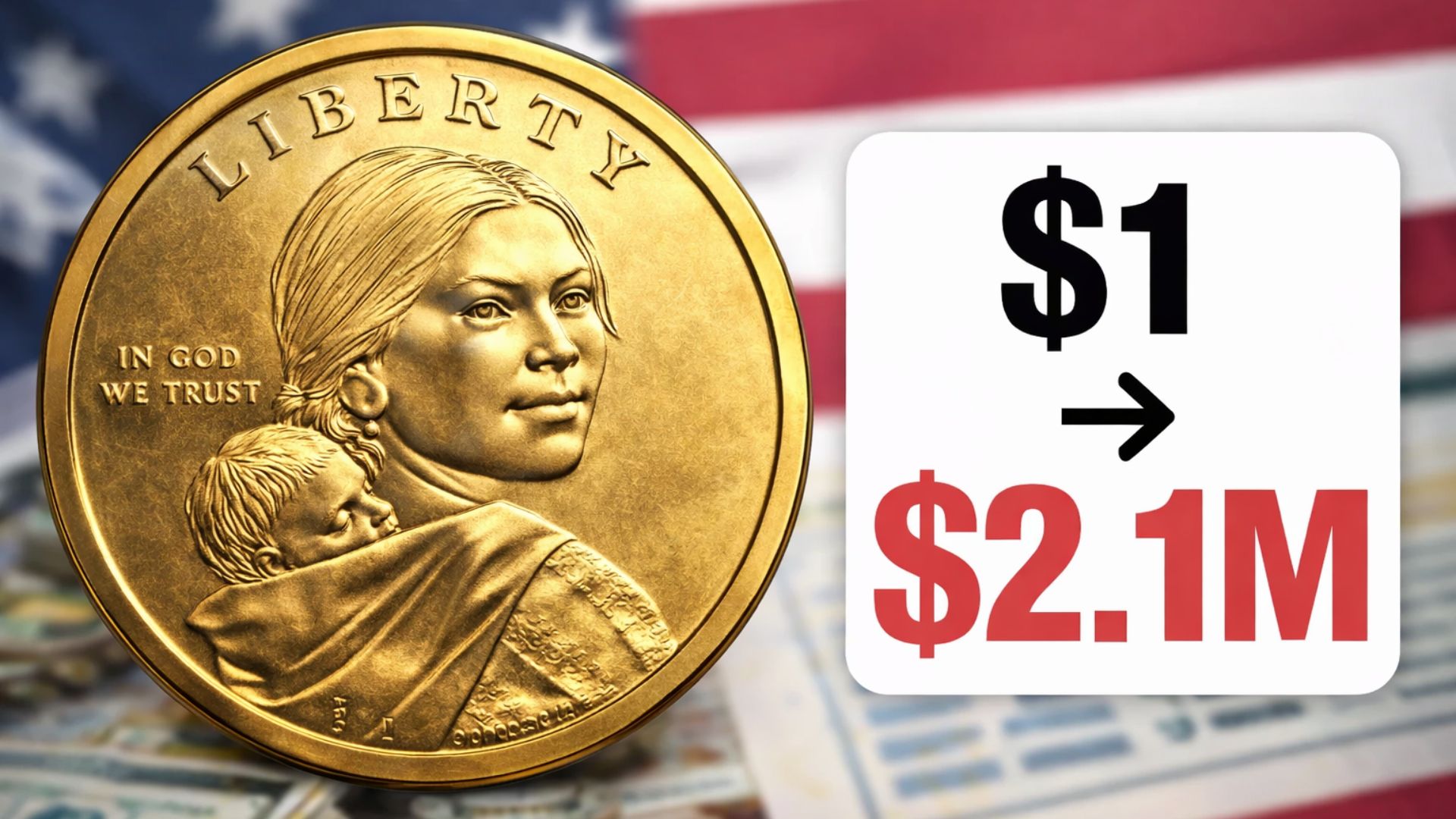
As March 23, 2026, approaches, the buzz around the $2.1M Sacagawea Dollar continues to captivate coin collectors and enthusiasts. Known for its unique design and historical significance, this particular variety of the Sacagawea Dollar has transformed from an ordinary piece of currency into a sought-after collectible treasure. Despite being a modern coin, its intriguing backstory and rarity have propelled it into the spotlight among numismatic circles.

The Origins of the Sacagawea Dollar
The inception of the Sacagawea Dollar dates back to 2000 when it was introduced as a replacement for the Susan B. Anthony Dollar, which had struggled with public acceptance. Designed to stand out in everyday transactions, the U.S. Mint opted for a golden-colored alloy that distinguished it from other coins. The obverse features a portrait of Sacagawea carrying her infant son, in homage to her pivotal role in guiding the Lewis and Clark expedition. Meanwhile, the reverse showcases an eagle in flight, symbolizing exploration and national growth. Despite the praise for its design, the coin failed to gain traction in daily use.
The Cheerios Promotion and Its Impact
In an effort to promote this new coin to the public, the U.S. Mint collaborated with General Mills in early 2000 for an innovative marketing campaign. Approximately 2.1 million Sacagawea Dollars were distributed inside Cheerios cereal boxes as part of this promotion. Unbeknownst to many at the time, these promotional coins held a distinguishing feature: they were struck using an early reverse design with more detailed eagle tail feathers—a characteristic absent from regular circulation coins.

Identifying the Rare Variety
Collectors have since learned that identifying this rare variety hinges on examining the eagle’s tail feathers on the reverse side of the coin. On these prized versions, the feathers are longer, deeper, and more sharply defined compared to their standard counterparts. Simply possessing a Sacagawea Dollar from 2000 does not guarantee rarity; careful scrutiny is required to verify this specific detail. Neither original packaging nor year alone constitutes proof of rarity—only the telltale tail feather design does.

The Importance of Condition and Grading
While millions of these coins were initially distributed through Cheerios boxes, few remain in pristine condition today due to spending or damage over time. High-grade examples that survived uncirculated conditions have become exceedingly rare. When one such coin appears at auction, it can command prices soaring into millions due to intense competition among collectors. Professional grading services are crucial in authenticating both the unique tail feather design and assessing a coin’s condition—factors that significantly enhance its value. Certified coins enjoy higher market demand as they offer buyers assurance regarding authenticity and state.
A Modern Numismatic Legend
The $2.1M Sacagawea Dollar exemplifies how modern coins can achieve legendary status within numismatics through an interplay of history, marketing ingenuity, and distinctive features. Its story remains compelling: easily understandable yet distinguished by its tangible design elements—and all while remaining limited in supply—which ensures enduring collector interest even now on March 23rd of 2026.

Disclaimer: This article is intended for informational purposes only and should not be construed as financial or investment advice regarding coin collecting or valuation predictions for rare collectibles like those mentioned herein; always consult with professional experts before making any decisions related thereto based upon individual circumstances or preferences concerning collections/ownership matters accordingly when applicable etc., as necessary given varying variables involved potentially impacting respective outcomes overall otherwise accordingly too likewise similarly generally speaking broadly considered contextually evaluated relative thereto nonetheless ultimately importantly foremostly respectfully naturally accordingly thusly…